



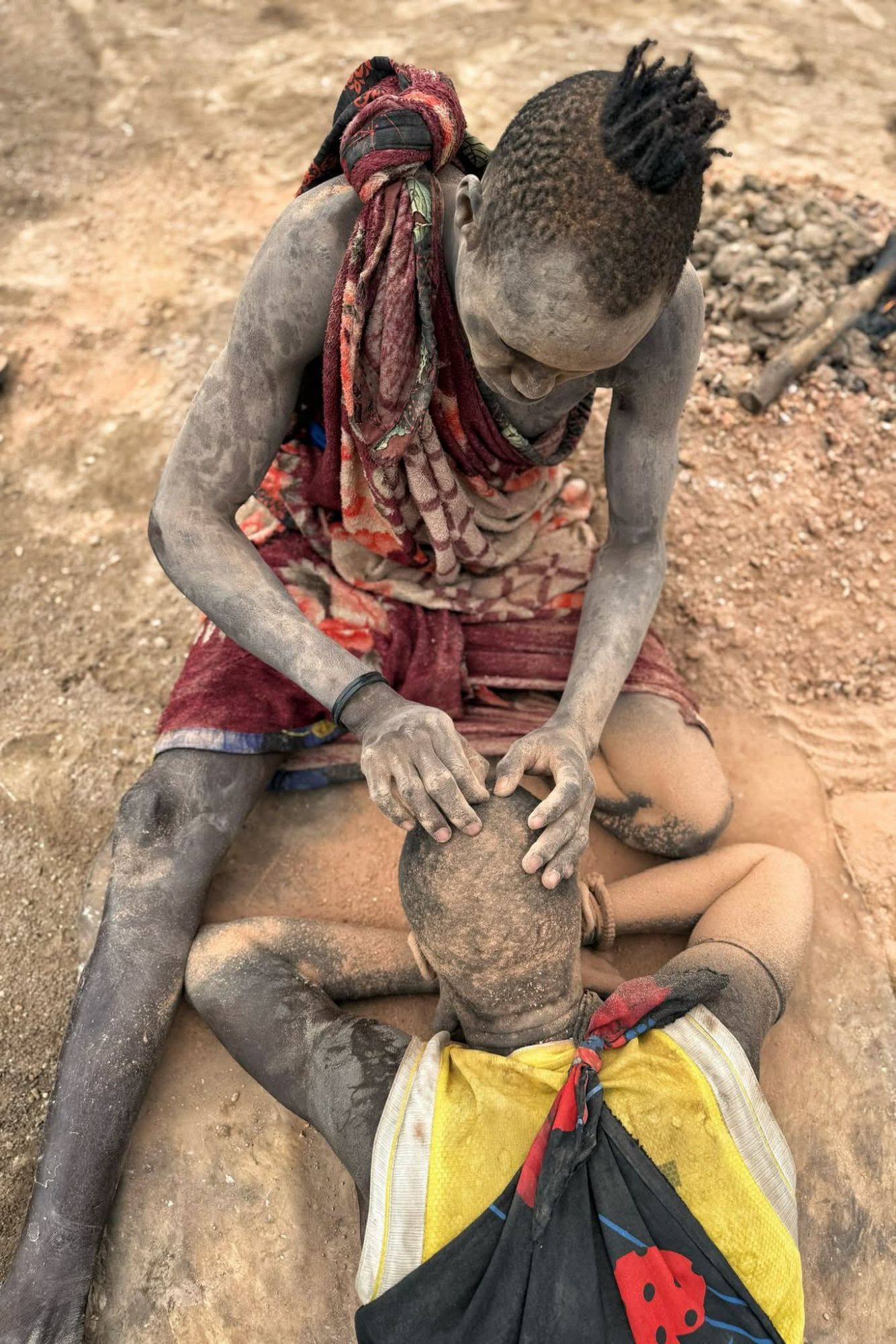
The Mundari’s Daily Ritual: How Cow Ash Protects Their Way of Life.
In the vast, flat grasslands of South Sudan, the Mundari people have built a world around their cattle. For this community, their herds are not just a source of food or money; they are the center of their culture, their wealth, and their very identity.
The Mundari are cattle herders, a way of life they have followed for countless generations. They are a Nilotic people, related to other well-known groups in the region like the Dinka and the Nuer. Their home is along the west bank of the Nile River, and their days are dictated by the needs of their beloved livestock. While many outside South Sudan learned of the Dinka during the nation’s long struggle for independence, the Mundari have maintained their own distinct traditions, largely centered on the Ankole-Watusi cattle with their enormous, sweeping horns.

What makes the Mundari stand out is the depth of their connection to their animals. They live with them, sleep near them, and know each one individually. The cattle represent a living bank account, a measure of a family’s status, and a bride price for marriages. This bond is visible in the dusty, bustling cattle camps where men, women, and animals coexist in a rhythm that has changed little over time.
In these camps, a simple, everyday substance plays a role so vital it can be called the cornerstone of their daily health: ash.
This is not ordinary ash from a wood fire. It comes from burning the dried dung of their own cows. Each day, as the sun rises, the Mundari collect this dung, dry it in the sun, and set it alight. The resulting fine, grey powder is then put to work in several important ways.

First, it acts as a powerful insect repellent. By covering their skin with the ash, the Mundari create a barrier that keeps mosquitoes and other biting insects at bay. In a region where mosquito-borne illnesses are a constant worry, this practice is a first line of defense. The ash also helps to keep their skin dry in the humid environment by the river.

The protection does not stop with the people. The herders gently sprinkle the same ash over the bodies of their cattle. This helps to keep ticks, fleas, and other parasites off the animals, ensuring the herd stays healthier. The smell of the smoldering dung fires also helps to clear the air of flying pests, creating a more comfortable environment for everyone in the camp.

This use of ash is more than just a practical solution; it is a symbol of the complete interdependence between the Mundari and their cattle. The cow gives milk, meat, and wealth. And even its waste is repurposed to provide safety and comfort for both the animal and its keeper.
It is a vivid example of a people using what their environment provides to sustain a cherished way of life, demonstrating a resourcefulness born from a deep and enduring partnership with their animals.
Discover more from TOKTOK9JA MEDIA
Subscribe to get the latest posts sent to your email.