

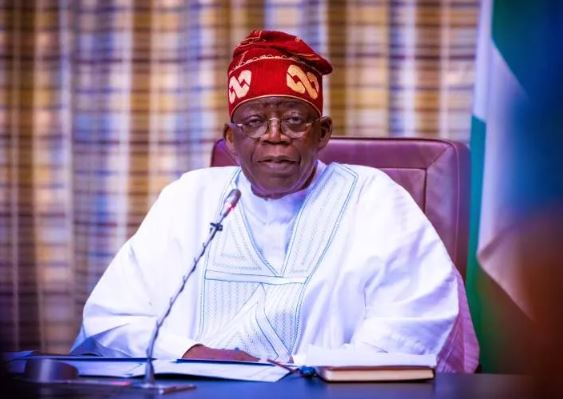
Tinubu’s New Security Rule: A Long List of Who Nigeria Now Calls a Terrorist.
President Bola Ahmed Tinubu’s administration has laid out a clear, and remarkably broad, new standard for who the Nigerian state will now treat as a terrorist. The directive, described as a “new security doctrine,” goes beyond typical militant groups to include a wide range of armed actors and, notably, those who enable them.
The core of the rule is blunt: “Outside state authority with lethal weapons equals terrorism.”
Based on this principle, the administration provided a list of thirty-one categories of individuals and groups that fall under this terrorist designation. The list aims to cover virtually every form of armed instability plaguing the country.
READ: Video Shows Moments Before ICE Agent Shot and Killed Mother of Three – Renee Nicole Good
At the top are any armed groups or individuals who operate without official state authorization. This directly encompasses the bandits, militias, and armed gangs responsible for kidnappings and attacks on communities across the nation. It also includes violent cult groups, foreign mercenaries, and any collective based in the nation’s vast forest areas.
The doctrine also explicitly states that using violence for any objective—whether political, ethnic, financial, or sectarian—now qualifies as terrorism. This places activities like communal clashes, political thuggery, and armed criminality under the same severe legal umbrella as insurgency.
Perhaps the most expansive part of the new rule targets what the government calls “enablers.” The list details a network of support roles that will now be treated with the same seriousness as pulling a trigger.
This includes the obvious, like financiers, arms suppliers, and those who transport fighters or weapons. But it also casts a net over more nuanced figures: ransom negotiators, people who provide safe houses, and informants who aid violent groups.

READ: “Will Not Bend the Knee”: American Official Reacts to ISIS Targeting Christians in Nigeria
Strikingly, the directive points a finger at community leadership. It names political protectors, traditional rulers, community leaders, and even religious leaders who are found to encourage, justify, shield, or facilitate terrorist activities as being subject to the same treatment.
The move appears designed to dismantle the entire ecosystem that allows armed violence to persist, attacking not just the symptom but also the underlying support structures. By legally defining harbourers and money handlers as terrorists, the government likely aims to cut off essential logistics and local protection that many groups rely on.
Security analysts note that the success of this doctrine will hinge entirely on consistent, impartial, and evidence-based enforcement. A definition this wide grants significant power to security agencies. The public will be watching to see if it is applied uniformly or if it could be used in a more targeted political manner.
READ: Trump Reveals Next President the US Could Target After Venezuela
Those who will be treated as terrorists listed:
- Bandits carrying arms and terrorizing communities.
- Militias operating beyond lawful command.
- Armed gangs and criminal networks with weapons.
- Armed robbers who deploy violence.
- Violent cult groups.
- Forest based armed collectives.
- Foreign linked mercenaries.
- Individuals or groups using violence for political objectives.
- Individuals or groups using violence for ethnic objectives.
- Individuals or groups using violence for financial objectives.
- Individuals or groups using violence for sectarian objectives.
- Kidnappers of civilians.
- Groups or individuals extorting communities.
- Groups or individuals occupying or attempting to occupy Nigerian territory by force.
Those who enable terrorism and will also be treated as terrorists
- Financiers of armed groups.
- Money handlers and fund movers.
- Harbourers of terrorists.
- Informants aiding violent groups.
- Ransom facilitators.
- Ransom negotiators.
- Political protectors of armed groups.
- Political intermediaries shielding terrorists.
- Transporters of fighters or weapons.
- Arms suppliers.
- Safe house owners.
- Politicians who facilitate or encourage violence.
- Traditional rulers who enable or protect terror.
- Community leaders who facilitate violent actions.
- Religious leaders who encourage or justify terror.
For now, the message from the Tinubu administration is singular and absolute: from the bandit in the forest to the intermediary in the city, the state is putting all actors in the chain of violence on formal notice.
Discover more from TOKTOK9JA MEDIA
Subscribe to get the latest posts sent to your email.