


No Food, No Water: How a Man Pushed Beyond Human Limits Survived 71 Days in the Desert.
It was January 2006, the height of the Australian summer, when Ricky Megee stepped out of his life and into a nightmare. The 35-year-old was on a road trip across the vast, empty center of the country. What happened next remains partly clouded—Megee would later say he was drugged by hitchhikers and left for dead. His car vanished. He was gone.
When he woke up, the world had been reduced to a single, brutal element: the Tanami Desert. Temperatures here regularly climb past 40 degrees Celsius (104°F). There is no water. There is no shelter. There is only sun, scrub, and silence.

For the next 71 days, Ricky Megee did not die. He persisted.
With no supplies, his mind sharpened to a single, desperate focus. He ate whatever moved. Frogs became a precious meal. He caught insects and lizards. He sucked on leeches for moisture. When rare rains fell, he used plastic sheeting to collect the muddy, life-giving water from puddles. He built a crude shelter from branches, a feeble but vital shield against the punishing sun. There were no grand survival strategies, only the raw, daily grind of finding something to swallow and somewhere to hide from the heat.
The desert does not care if you live or die. It simply is. As the weeks bled together, Megee’s body began to consume itself. The fat went first, then the muscle. He was withering away, becoming a shadow of the man who had arrived there.
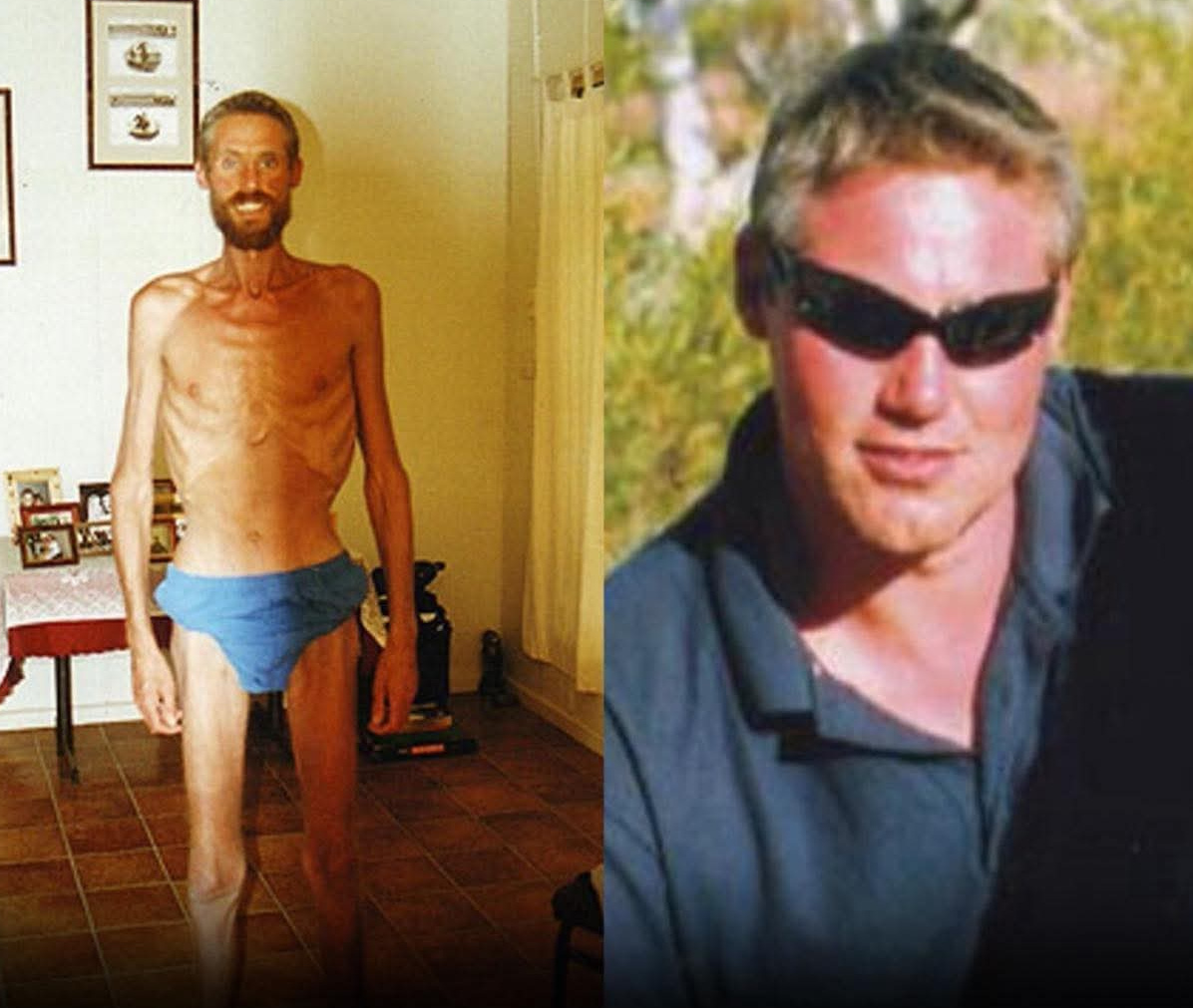
In early April, stockmen checking fences in a remote part of the outback came across a sight they could scarcely believe. A man, so thin he was described as a “walking skeleton,” was stumbling through the brush. Ricky Megee had been found. He had lost an astonishing 60 kilograms—over 130 pounds. His body had survived, but at a cost that was written in his bones and hollowed-out face.
His story sparked awe, but also questions. Over time, his account of how he ended up in the desert shifted, with details about a car breakdown or a carjacking changing in different stories. Some doubted him. Yet, the doctors who treated him were clear on one point: his extreme emaciation was absolutely real and completely consistent with someone who had endured over two months of starvation in a harsh desert environment. The physical evidence was undeniable.
READ: “What If It Was Your Daughter?”: Nigerian Reacts to Photos of Male Teacher Searching Female Students
The truth of Ricky Megee’s story may have two sides. But the result does not. His survival stands as one of the most extreme on record. It shows us what the human body and mind can be forced to do when every other option is gone. It is not a clean story of heroism, but a messy, painful story of endurance.
He did not walk out of the desert unchanged. Recovery was long. The mind, once stripped down to pure instinct, has to learn to live in a world of abundance and noise again. The body bears the scars.
Ricky Megee’s 71 days remind us that the will to live can be an almost unstoppable force. But they also show that such a victory is never free. Nature presents the test, and survival is the answer, paid for with everything you have.
No Food, No Water: How a Man Pushed Beyond Human Limits Survived 71 Days in the Desert.
Discover more from TOKTOK9JA MEDIA
Subscribe to get the latest posts sent to your email.