


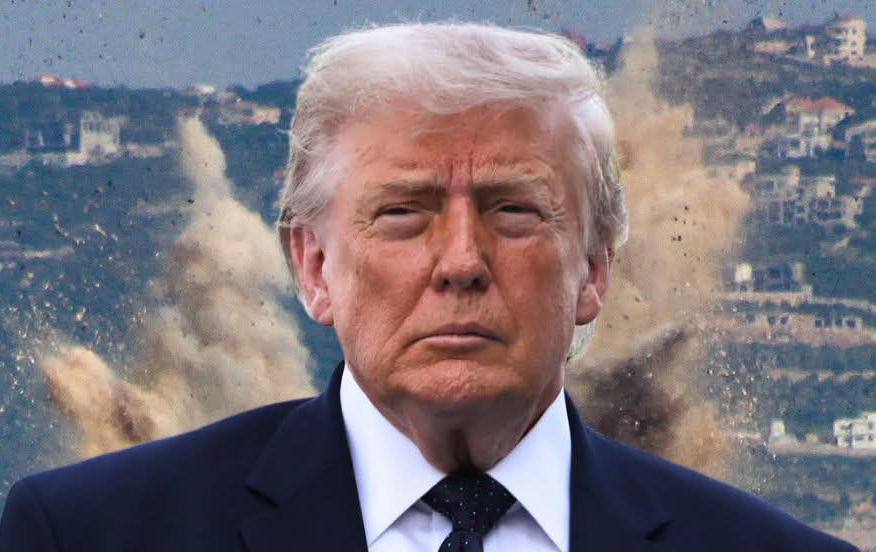
“Any Time Iran Shoots a Ship US Will Bomb and Destroy a Bridge or Power Plant” – Trump Warns Iran.
The US president has put Tehran on notice with a direct threat targeting Iranian infrastructure in response to any future attacks on commercial vessels in the Strait of Hormuz.
President Donald Trump has delivered one of his most explicit warnings to Iran since the conflict between the two countries resumed, declaring that the United States will destroy an Iranian bridge or power plant for every attack on ships in the Strait of Hormuz.
In a post on his Truth Social platform, Trump made it clear that any form of assault on commercial shipping would trigger a swift US military response .
“From this point forward, any time the Islamic Republic of Iran shoots at a ship in the Strait of Hormuz, whether it be by Missile, Rocket, Drone, or any other device or weapon, the United States will bomb and destroy ONE BRIDGE OR POWER PLANT, including those located next to, or in, the Capital City of Tehran,” the president wrote .
The warning comes as US strikes against Iran continue for an eleventh consecutive night, with military operations now extending from the south to western and central areas of the country . The Pentagon has confirmed that the latest operations are intended to further degrade Tehran’s ability to threaten international maritime traffic in the strategic waterway.
READ: Couple Gets Engaged Atop Empire State Building — Then Arrested (Video)

The Strait of Hormuz, through which roughly one-fifth of the world’s traded oil and gas passed during peacetime, has become the focal point of the escalating confrontation . Iran has imposed a near-total blockade on the strait, firing on vessels that attempt to transit, while the US military has been guiding ships through routes closer to Omani waters .
According to US Central Command, Iran has attacked more than 30 commercial vessels transiting the international waterway over the past three months . These attacks have endangered hundreds of innocent mariners and disrupted global energy supplies, sending oil prices to their highest levels in weeks.
READ: Trump Orders Strikes on Iran After U.S. Helicopter Shot Down Over Strait of Hormuz
The US military has been broadcasting warnings to neutral vessels, advising them to immediately depart Iranian ports and discontinue transit if Iran is their next port of call . American forces have also resumed a naval blockade of Iranian ports, effectively choking off Tehran’s crude exports.
Iran has responded to Trump’s latest threat by vowing to strike back at US-linked bridges and energy facilities across the Middle East if its infrastructure comes under attack . The country’s top negotiator, Mohammad Bagher Ghalibaf, has warned that “the equation of this war is clear: either all or none,” adding that “if our security is not ensured, no infrastructure will be safe” .
Iranian state media reported that air defences were activated in the capital Tehran, with explosions also reported in the north-western city of Tabriz, the south-eastern ports of Chabahar and Konarak, and the southern city of Bushehr, home to Iran’s only nuclear power plant.
READ: Four Nigerian Students Win Gold at Spelling Bee World Cup in Shanghai
The Khatem al-Anbiya Central Headquarters, Iran’s joint military command, warned that it would target the interests of Washington and its allies in the region should the US strike Iranian nuclear facilities . This came after Trump said the US would soon target an underground nuclear site near Natanz, known as Pickaxe Mountain, where Western intelligence agencies suspect Iran is building an undeclared enrichment facility.
Trump’s threat to target Iranian bridges and power plants has drawn criticism from some international law experts and world leaders, who have pointed out that such attacks on civilian infrastructure are generally prohibited under international law unless the facilities are being used for military purposes.
United Nations Secretary-General Antonio Guterres has decried such attacks as “unacceptable,” while the US military insists its operations are focused on military capabilities linked to attacks on international maritime traffic.
Despite the escalation, Secretary of State Marco Rubio has maintained that Washington remains open to diplomacy if Iran engages seriously . “If they’re serious, we’re serious. If they’re not, then we will do what’s necessary to protect our interests, and also the interests of our allies,” Rubio said at a regional summit in the Philippines .
However, a Pakistani-brokered framework agreement signed by the US and Iran in June to halt military operations and reopen the Strait of Hormuz has unravelled . Trump declared the ceasefire “over” after Iranian attacks on ships in the strait, and both sides have since returned to open conflict.
The war, now approaching its five-month mark, has cost Washington an estimated $37.5 billion and has become increasingly unpopular among the American public ahead of the upcoming midterm elections . Trump, however, has so far resisted pressure to find an off-ramp, telling reporters, “We’re not finished at all… we’re not leaving right now” .
Discover more from TOKTOK9JA MEDIA
Subscribe to get the latest posts sent to your email.