


The Andre Thomas Case: He Told Them He Was Going to Kill Someone, They Let Him Walk Out, Days Later He Killed His Ex-Wife and Her Children.
When a man walked into a Texas clinic and told staff he was going to kill someone, they let him leave. Three people died days later.
In March 2004, Andre Thomas was coming apart in ways those around him could see, hear, and even warn others about. What followed has become one of the most disturbing cases in Texas criminal justice history—not just for the violence that unfolded, but for the series of missed opportunities that preceded it.
Thomas, now on death row, had been showing clear signs of severe mental illness for weeks before he murdered his ex-wife and her two young children in Grayson County. He was drinking bottles of cold medicine like water. He was hearing voices. He was seeing visions. And he was telling people he needed help.
The first warning came on March 5, 2004. A friend, alarmed by Thomas’s violent episodes, rushed him to a mental health clinic. Thomas was direct with staff about what he believed was coming: “If y’all don’t help me, I’m going to step in front of a bus.”

The clinic’s response was to send him to the emergency room.
He never went.
Twenty days passed. Then, on March 25, Thomas stabbed himself in the chest and finally arrived at Texoma Medical Center. He told medical staff he had been trying to “cross into heaven.”
Doctors at the hospital recognized the severity of his condition. They wanted him held for a psychiatric evaluation. But in Texas at that time, placing someone on an emergency detention required a judge’s approval. While hospital staff waited for that legal step to clear, Thomas walked out of the facility.
No security stopped him. No hold was in place. He was free.
READ: The Rise and Fall of Runway Queen Suzy Pérez: From Stardom to the Streets
On March 27, Thomas showed up at the home of his ex-wife, 20-year-old Laura Thomas. Inside were Laura, their four-year-old son Andre Jr., and Laura’s one-year-old daughter Leah.
He arrived carrying three knives.
When investigators later asked why he brought three, his answer was chilling in its detail. He said he did not want to “cross-contaminate” their blood. He told them he believed his ex-wife and the children were possessed by demons. In his mind, he was not committing murder. He was “freeing” them.
What happened inside that home is almost impossible to describe. Thomas stabbed all three to death. He cut open their rib cages. He attempted to remove Laura’s heart but instead took part of her lung. He removed the hearts of both children.
After the killings, he placed a dollar bill near the bodies—specifically with the pyramid and the eye facing up—something he later said was a symbol he believed was controlling him.
Then he lay down beside the bodies and stabbed himself again.
When he did not die, he placed the children’s organs in his pockets and walked home.
Once home, Thomas washed the knives, changed his clothes, and called Laura’s parents. He left a voicemail. “I need y’all’s help,” he said. “I think I’m in hell.”
He then turned himself in.
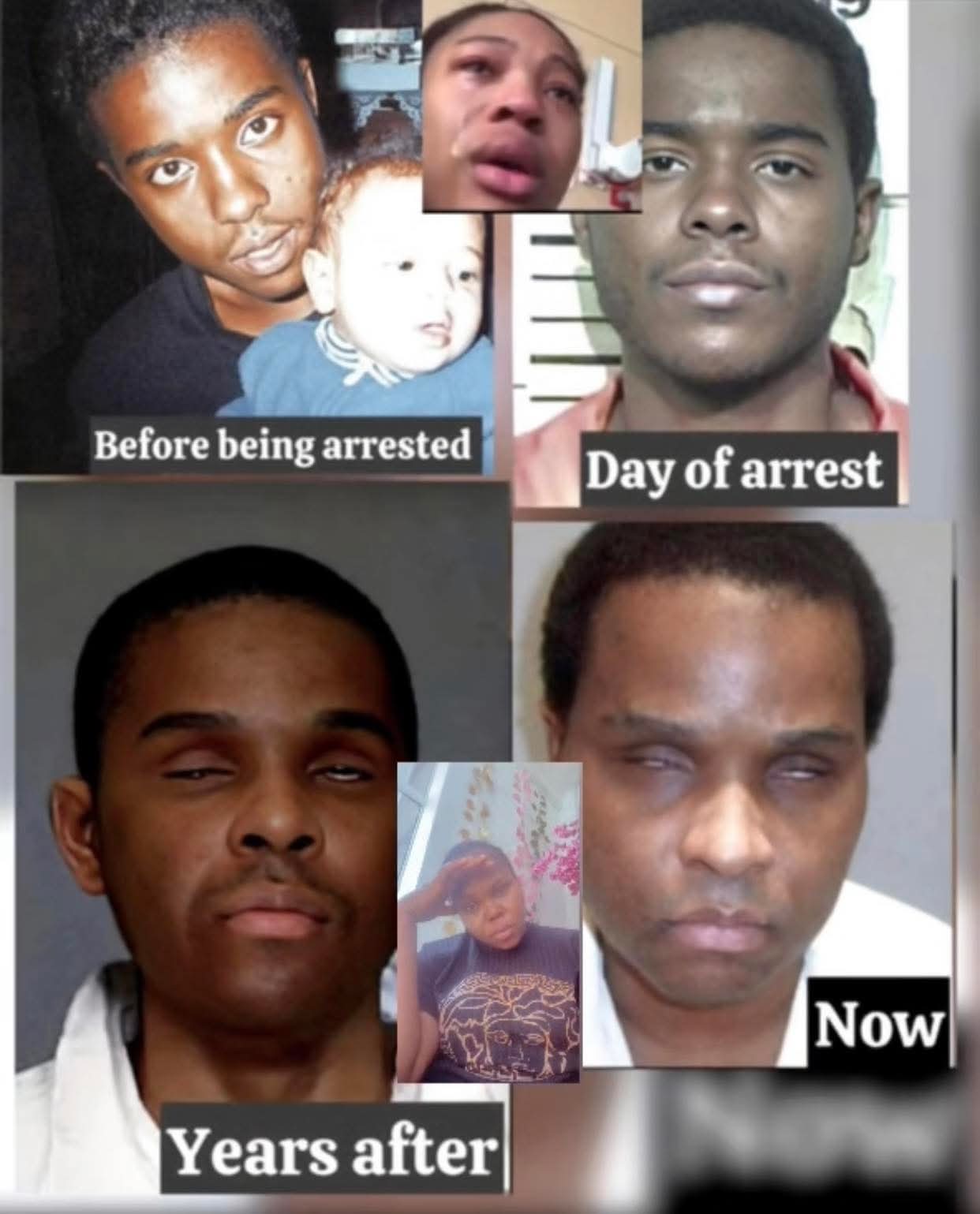
But even in custody, his unraveling continued. While alone in his jail cell, Thomas gouged out his own left eye with his bare hands. He later quoted scripture—Mark 9:47, which speaks of plucking out the eye that causes one to sin. Doctors were unable to save the eye.
He was diagnosed with schizophrenia and initially ruled incompetent to stand trial. After 47 days in a state hospital, he was deemed fit for trial.
His defense team argued insanity. Prosecutors pointed to his drug use—the bottles of cold medicine he had been consuming—and argued his mental condition had been worsened by voluntary substance abuse. The court rejected the insanity defense.
In March 2005, Thomas was convicted of capital murder and sentenced to death.
On December 9, 2008, nearly four years into his death row confinement, Thomas removed his remaining eye. He consumed it. He later explained that he did not want the government reading his thoughts.
Today, Andre Thomas remains on death row in Texas. His execution has been delayed multiple times as legal battles continue over questions of his mental competency.
The case has become a recurring reference point for those examining gaps in mental health crisis response. A man asked for help. He said plainly what he feared he might do. He was directed elsewhere. He showed up at a hospital with a self-inflicted wound. Doctors wanted to hold him. The legal process moved too slowly. He walked out.
Two days later, three people were dead—including a toddler and a four-year-old boy whose father had been crying out for intervention in the weeks before.
The questions raised by this case remain unresolved. When someone in mental health crisis tells professionals they are going to hurt themselves or others, what level of response is required? At what point does a warning become a responsibility? And how many chances need to be missed before the system is considered broken?
For the families of Laura Thomas, Andre Thomas Jr., and Leah Thomas, those questions have no answers that bring comfort. Only the weight of knowing that someone sounded the alarm, and no one moved quickly enough to stop what came next.
The Andre Thomas Case: He Told Them He Was Going to Kill Someone, They Let Him Walk Out, Days Later He Killed His Ex-Wife and Her Children.
Discover more from TOKTOK9JA MEDIA
Subscribe to get the latest posts sent to your email.