


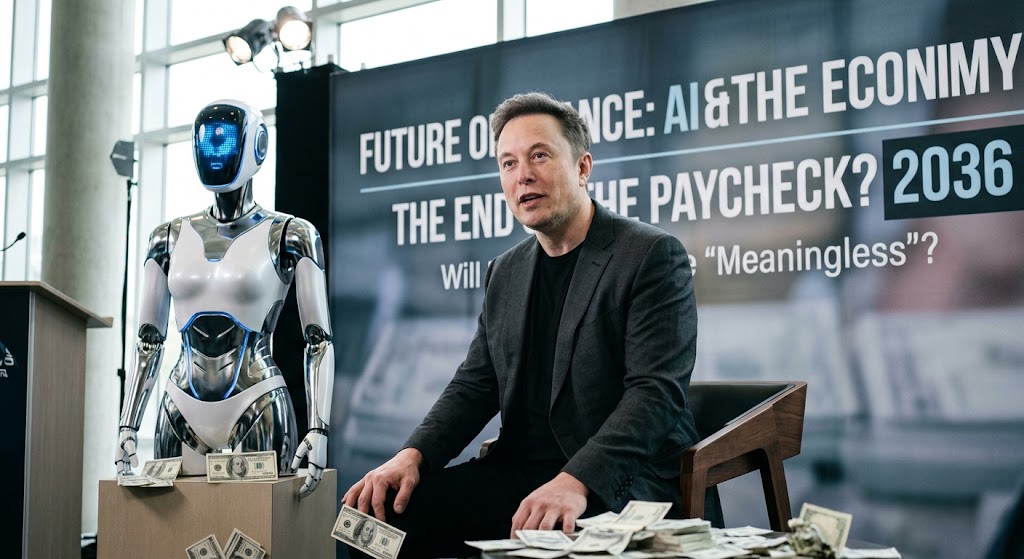
Will Money Become ‘Meaningless’ by 2036? Musk Says AI Could Kill the Paycheck in Ten Years.
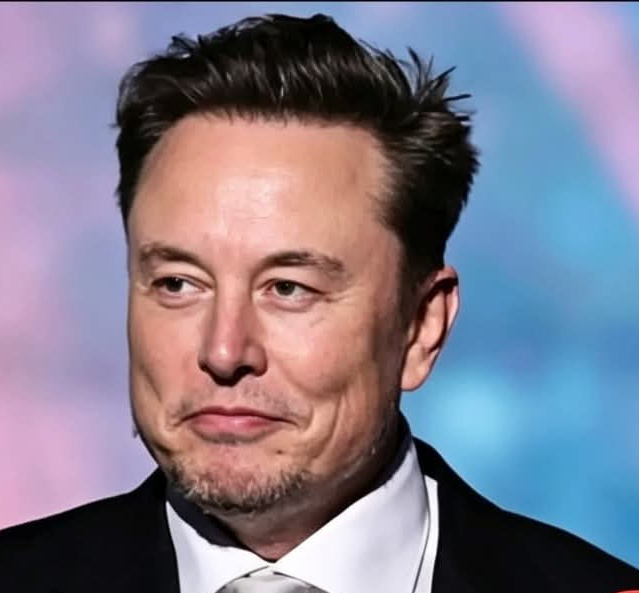
It sounds like the plot of a science fiction novel, but for Elon Musk, it is a forecast for the near future. The tech billionaire has once again stirred up debate by suggesting that money could lose its power within the next ten years. His prediction is not about inflation or economic collapse, but about something far more transformative: the rise of artificial intelligence and humanoid robots.
According to Musk, we are heading toward a turning point where machines become so productive that they can produce almost everything people need. This includes not just physical goods like food and cars, but also services like transportation and manufacturing. His timeline is ambitious—he has suggested that by around 2036, “money won’t matter.”
Musk’s argument is simple and rooted in basic economics. Money only holds value because resources and goods are limited. When supply is tight, people compete for it, and money is the tool they use to do that. But what happens when that supply is no longer tight? Musk believes that AI-driven manufacturing and robotic labor will drive the cost of production down to nearly zero.
In his view, if an AI system can design a product and a robot can build it without human help, the expense of making things becomes minimal. This creates a form of abundance that humanity has never experienced before. In such a world, the daily struggle to earn a living could fade away. Work, as we know it, would become optional—something people do for personal fulfillment rather than survival.
If we take Musk’s vision at face value, the implications are staggering. Imagine a society where food is produced by automated farms, housing is built by robotic construction crews, and transportation is managed by self-driving fleets. The cost of these services would drop so low that everyone could access them without needing a large income.
Musk has often described this as a “post-scarcity” economy. In this future, basic needs are covered, and human beings are free to pursue creative projects, scientific exploration, or simply enjoy their time. It is a picture of a world where survival is guaranteed, and purpose comes from passion rather than payroll.

However, the road to this future is not without obstacles. Musk’s prediction raises more questions than answers.
The first and most urgent issue is ownership. Who owns the robots? Who controls the AI systems that produce all this abundance? If a handful of companies or individuals control the means of production, they would hold unprecedented power over the rest of society. In that scenario, money might not disappear; it might just become more concentrated in the hands of the few who own the machines.
READ: Virtual Intimacy: Scientist Built a Device that Transmit Real Kiss Between Long Distance Couples
Then there is the issue of physical resources. Even if robots can manufacture goods cheaply, they still need raw materials like metals, water, and energy. Land itself is also finite. No matter how advanced technology gets, there is only so much physical space on Earth. While AI might help us use resources more efficiently, it cannot create more land or guarantee that energy will always be free.
These are not minor details. They are the central challenges that economists and policymakers will need to address if Musk’s prediction ever becomes reality.
For most working people, the idea of optional work is both exciting and unsettling. The transition period alone could be painful. If AI begins replacing jobs faster than new roles are created, we could see a period of widespread displacement and social unrest.
Musk has acknowledged this risk and has previously suggested the need for a “universal high income” to support people during the transition. He has also argued that the nature of work will change. Instead of repetitive tasks, people may focus on areas where humans still have an advantage—creative fields, emotional intelligence, and complex problem-solving that requires a human touch.
READ: What to Do When a ‘Private Number’ Calls: A Simple Trick
But this raises another question: can people adapt quickly enough? History shows that technological shifts often leave certain groups behind. The speed at which AI is advancing today is much faster than previous industrial revolutions, leaving less time for society to adjust.
The 2036 timeline is, by Musk’s own admission, a guess. Other experts in the field of AI and robotics are more cautious. Many believe that while automation will certainly increase, the kind of universal abundance Musk describes is still decades away.
There are also philosophical questions to consider. Even if money becomes less relevant, will human nature change? People have always found ways to compete, compare status, and desire things that others have. Scarcity is not just an economic reality; it is part of human psychology. Removing financial pressure might solve one set of problems, but it could create new ones around purpose, identity, and social order.
Whether or not Elon Musk’s vision comes true, one thing is certain: the conversation is already shaping how we think about the future. Governments are beginning to discuss AI regulation. Companies are investing heavily in robotics. And everyday people are starting to wonder what their careers will look like in twenty years.
Musk’s prediction is not a guarantee. It is a call to think ahead. If machines really do take over the grunt work of society, we need to decide now how that world should be organized. We need to ask who benefits, who gets left behind, and what kind of life we want to build when survival is no longer a daily worry.
For now, money still matters. But if Musk is right, the countdown has already started.
Discover more from TOKTOK9JA MEDIA
Subscribe to get the latest posts sent to your email.