
FG to End JSS-SSS Split as 20 Million Pupils Abandon School.
The Federal Government has announced plans to discontinue the policy that separates Junior Secondary Schools from Senior Secondary Schools, after discovering that more than 20 million pupils drop out before reaching the senior secondary level.
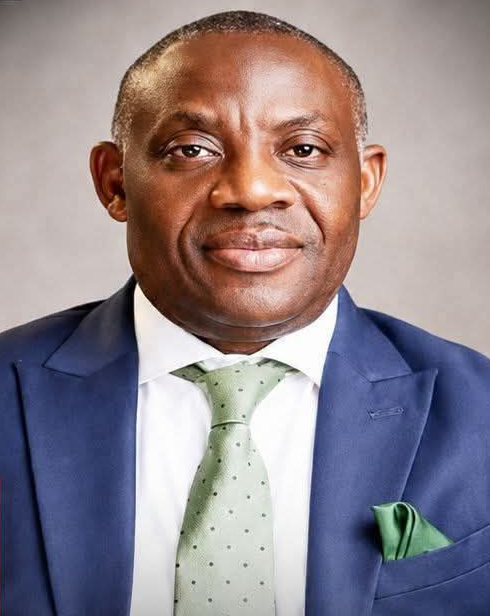
Minister of Education, Dr. Tunji Alausa, made the announcement on Tuesday in Abuja during the inauguration of the Universal Basic Education Commission Ministerial Implementation and Monitoring Committee.
Alausa said the “disarticulation policy,” which requires JSS and SSS to operate separately with different principals and facilities, has not delivered the expected results . He described the policy as a failure that has worsened access to education across the country.
The minister revealed troubling statistics that paint a clear picture of the education system’s challenges. Nigeria currently has about 80,000 public primary schools but only around 15,000 junior secondary schools.
“We have 20 million dropouts from primary school to JSS. Where are those students? We also found we have 80,000 public primary schools and only about 15,000 junior secondary schools. That’s a one-to-eight ratio,” Alausa said.
READ: Viral Video Shows Police Greeting Armed Riders
The imbalance has created a severe transition gap. While approximately 24 million children enrol in primary schools, only about four million complete senior secondary education . The minister pointed out that the situation has led to overcrowded junior secondary schools while many senior secondary schools remain underutilised, particularly in Kaduna and other northern states.
Declaring the policy unsuccessful, Alausa did not hold back in his assessment.

“This disarticulation policy has failed. We will phase it out. We can’t be creating positions because we want to create a director level for people while we harm our education system. It’s about doing what is best for every Nigerian child,” he said .
The minister acknowledged that previous administrations had not adequately addressed the problem but expressed confidence that the current government would reverse the trend.
“The previous governments may have failed in this regard, but this government will not fail. We are fixing this. We need to create more opportunities for children to move seamlessly through the education system,” he added.
Alausa said the proposal to formally abolish the policy will be presented at the next meeting of the National Council on Education for consideration and approval.
The reform is part of broader efforts to improve enrolment, strengthen progression between education levels, and enhance learning outcomes nationwide.
READ: Kaduna Islamic Teacher Lynched and Burnt by Mob Over False Child Theft Accusation – Video
At the same event, the minister inaugurated a committee chaired by education expert Professor Rashid Aderinoye to accelerate the completion and operationalisation of Smart Schools, Bilingual Schools, and Alternative Schools funded by UBEC across the country.
Alausa expressed concern that despite substantial public investment, many of the schools had either been abandoned or completed without being handed over to state governments for academic activities.
“Every day a completed school remains locked represents lost opportunities for thousands of Nigerian children. Every abandoned project represents resources that are not yielding their intended educational value,” he said .
The committee is expected to ensure the completion of ongoing projects, provision of furniture and equipment, installation of utilities, deployment of teachers, and prompt enrolment of learners.
READ: FG Launches FreeTV: Nigerians Get Over 100 Channels Without Subscription Fees
UBEC Executive Secretary, Dr. Aisha Garba, disclosed that 37 Smart Schools have been established nationwide, with 24 already conducting academic activities . She also revealed that under the UBEC-Islamic Development Bank Bilingual Education Programme, 30 schools have been established across nine states, with three boarding schools already commissioned.
Nigeria continues to face a major education access challenge, with millions of school-age children, particularly in rural and conflict-affected communities, still outside the formal school system. The Federal Government says improving access will require not only building schools but ensuring facilities are completed, functional, and adequately equipped for learners.
The education minister expressed confidence that the current administration would deliver meaningful reforms, saying: “This government will not fail. We are fixing it.”